 Demo previewPlay free demoVirtual credits · No registration · 18+

Pasur
Play for real money ↗Operator links on this page are affiliate links. The site may earn a commission, which does not affect ratings or the published facts.
Pasur — Game Specifications
| Parameter | Value |
|---|---|
| Game Category | Card Games |
Table of Contents
Pasur Game Review
Clearing the table earns a special place in Pasur. Galaxsys' card game centers on taking cards with a played hand card, with a Sur awarded for sweeping the table without using a Jack. Score: 7.5/10. Practice completed 12 full-deck rounds. Legal highlights help explain the first capture, though good play needs memory beyond whichever move happens to be available now.
The next capture begins with what remains on the table.
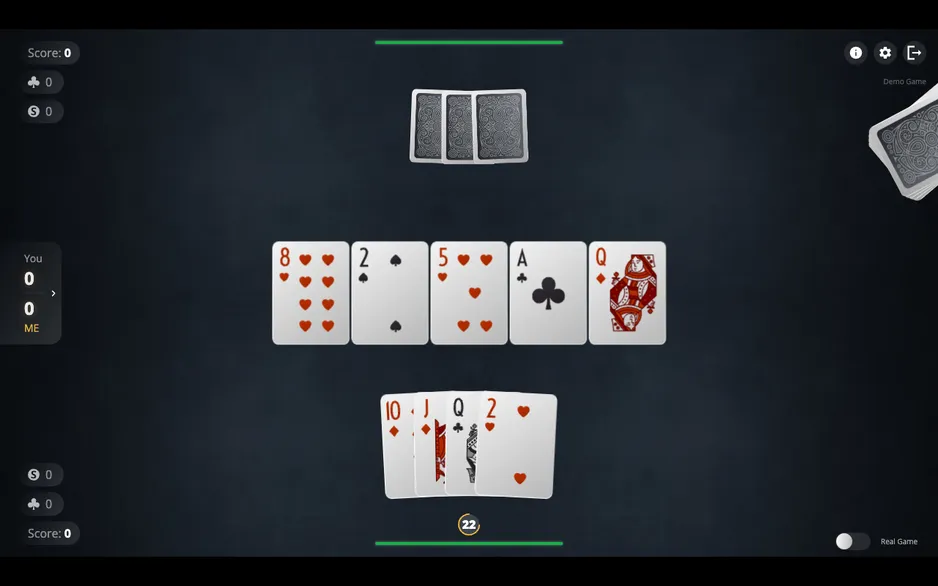
Select a card, then inspect the table
Choose a hand card to reveal legal capture or discard options.
A highlighted table card shows a compatible choice, helping a newcomer see where the selected card can act before committing it. A capture removes cards from the shared table. A discard adds one. Those opposite effects make the next player's options depend on which card was played, as well as which useful cards remain in hand.
Four-card redeals continue the current full-deck round. They are fresh choices within that round. A completed deck brings scoring before play continues, so judging progress from a single small deal can miss the cards and scoring events gathered across the rest of the deck. The platform sets stake limits. Check the table’s stakes plus prize terms before joining.
Demo: twelve scored rounds
Try the free card table to learn which cards to take. The guide also shows how to check the score. Testing selected the first hand card and followed the first highlighted capture, discarding only when needed; it completed 12 full-deck rounds within the timed practice session.
| Measure | Result |
|---|---|
| Completed full-deck rounds | 12 |
| Won rounds | 5 |
| Lost rounds | 7 |
| Completed matches | 0 |
| Longest run of lost rounds | 2 |
| Player terminal Soor counters | 2 |
| Opponent terminal Soor counters | 0 |
| Cash stakes and returns | — |
The simple selection policy lost more rounds than it won. Five wins came against seven losses. The longest losing run was two full decks, while the player’s terminal Soor counters totaled two and the opponent's stayed at zero across completed rounds. Those counters are card-game results. They represent no recorded bonus money. No complete match ended before the time limit, so the session supports round observations rather than a match verdict.
Sur rewards a clear table
A Sur requires taking every table card without playing a Jack. That condition makes the board left for an opponent important, since an easy sweep offered on the next turn can hand over a scoring chance even after a capture that seemed useful. Clearing feels rewarding. Leaving the wrong cards can be costly. Read the whole table before choosing the first highlighted option simply because it is legal.
| Card-game element | Role | Reason to care |
|---|---|---|
| Capture | Takes compatible table cards | Changes the opponent’s next choices. |
| Discard | Adds a hand card to the table | May create a later capture. |
| Sur | Clears the table without a Jack | Adds a special scoring event. |
| Tens and Aces | Contribute bonus points at scoring | Card value matters beyond capture count. |
| Score history | Records full-deck results | Several deals belong to one scored round. |
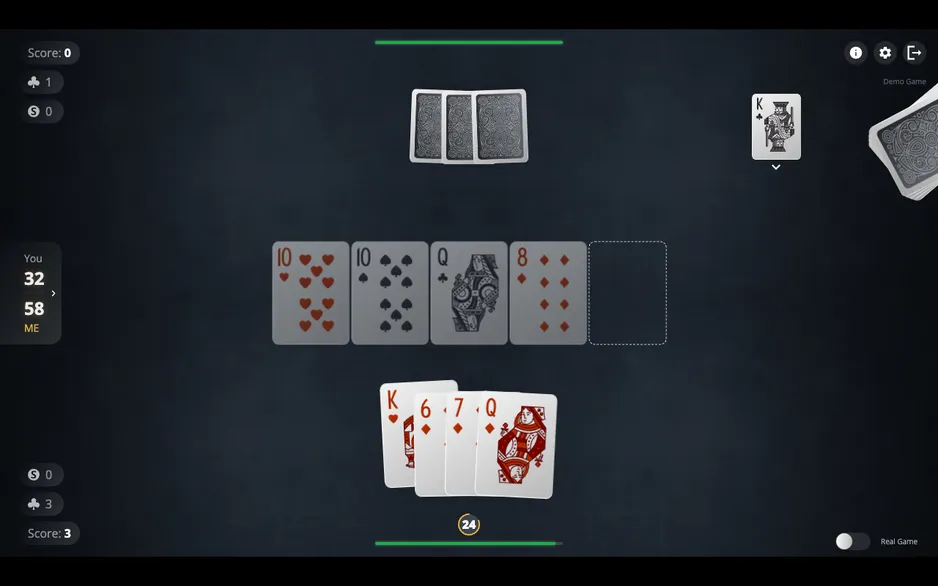
Official material also identifies Tens and Aces as scoring cards. Look beyond the raw number of cards taken and read the scoring rules for the chosen table. Check the table convention. A good capture should be judged against the scoring in that game, especially when a memory of another variant suggests a different priority.
Reviewing captures and scores
The last-capture panel opens to show the cards taken. Reviewing that panel helps explain an action after it has finished, while the score history tracks completed full-deck rounds instead of treating every four-card deal as a separate result. The table information panel lists conventions. Read those before relying on a display label. A shown prize is different from a confirmed money return after a completed contest.
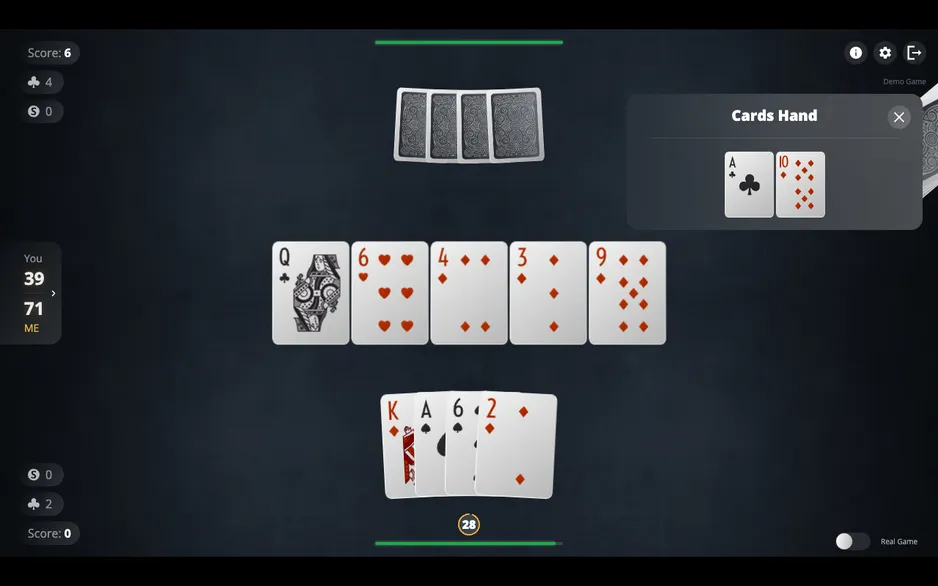
The recorded session has card scores but no cash balance or verified payout, so its table results establish no return percentage.
Settings include theme, animation and sound controls. The tested table used the Dark theme. Animation was switched off after setup, keeping the capture policy the same while changing how moves were presented. A different theme can improve contrast. It leaves the legal capture choices intact, making appearance a comfort decision rather than a way to alter the next dealt card or secure a scoring advantage.
Who may find Pasur demanding?
Pasur is a weak match for readers wanting an instant result after one tap. Rounds involve many turns. Captures and redeals keep revisiting the shared table, so paying attention only when a new hand arrives misses useful information about which cards have already appeared. Frankly, the cards reward a memory. Highlights make legal play easier without selecting the best card or tracking the opponent's plans.
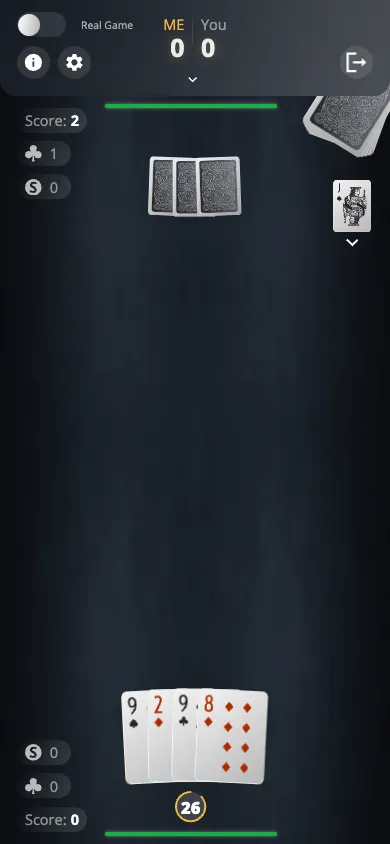
Mobile support includes portrait and landscape browser play, giving the table a choice of orientation when card faces feel cramped on a narrow display.
- A short deal is only part of a scored round.
- Legal captures can leave better opportunities for an opponent.
- Stake limits and platform commission need their own check.
Verdict: capture choices worth learning
The 7.5/10 score credits clear capture aids plus the Sur condition, though the game needs more sustained attention than a quick card-flip title if the player wants decisions to go beyond legal first choices. The limited practice policy finished behind. Its results make a useful learning example. Pasur earns interest through what to capture or leave.
Paid tables are for adults 18+. Set a fixed entry budget before joining, with a time to leave as well. Respect that stopping point after a losing deck. Raising the next stake to recover points can turn a card setback into a larger money loss. Operators determine cash payment terms; demonstration scores have no cash-out value.
Screenshots of Pasur


Frequently Asked Questions — Pasur
What is Pasur?
Pasur is a card-capture game. Players use hand cards to take compatible cards from the shared table.
What earns a Sur?
A player earns a Sur by taking every table card without playing a Jack.
Is a fixed RTP published?
No, the available official record gives no fixed RTP. Card choices and opponent play affect results.
Can Pasur be practiced free?
Yes, a demo mode provides card-game practice. Its board scores are not recorded cash payouts.
Are stake limits the same everywhere?
No, official material says minimum and maximum stakes depend on the operator and match type.
Does Pasur support mobile browsers?
Yes, official support includes iOS and Android with portrait and landscape play.
Do highlighted moves guarantee a good capture?
No, highlights show legal choices. Scoring value and the table left behind still need judgement.
How was Pasur tested?
Timed practice completed 12 full-deck rounds using first legal highlighted captures. There were 5 wins, 7 losses and no recorded cash return.
Player rating
Player comments
Only registered players can post comments.
No comments yet. Share how the game played for you.